How Drainage Problems Ruin a Paver Patio in Columbia, TN (and How to Prevent It)
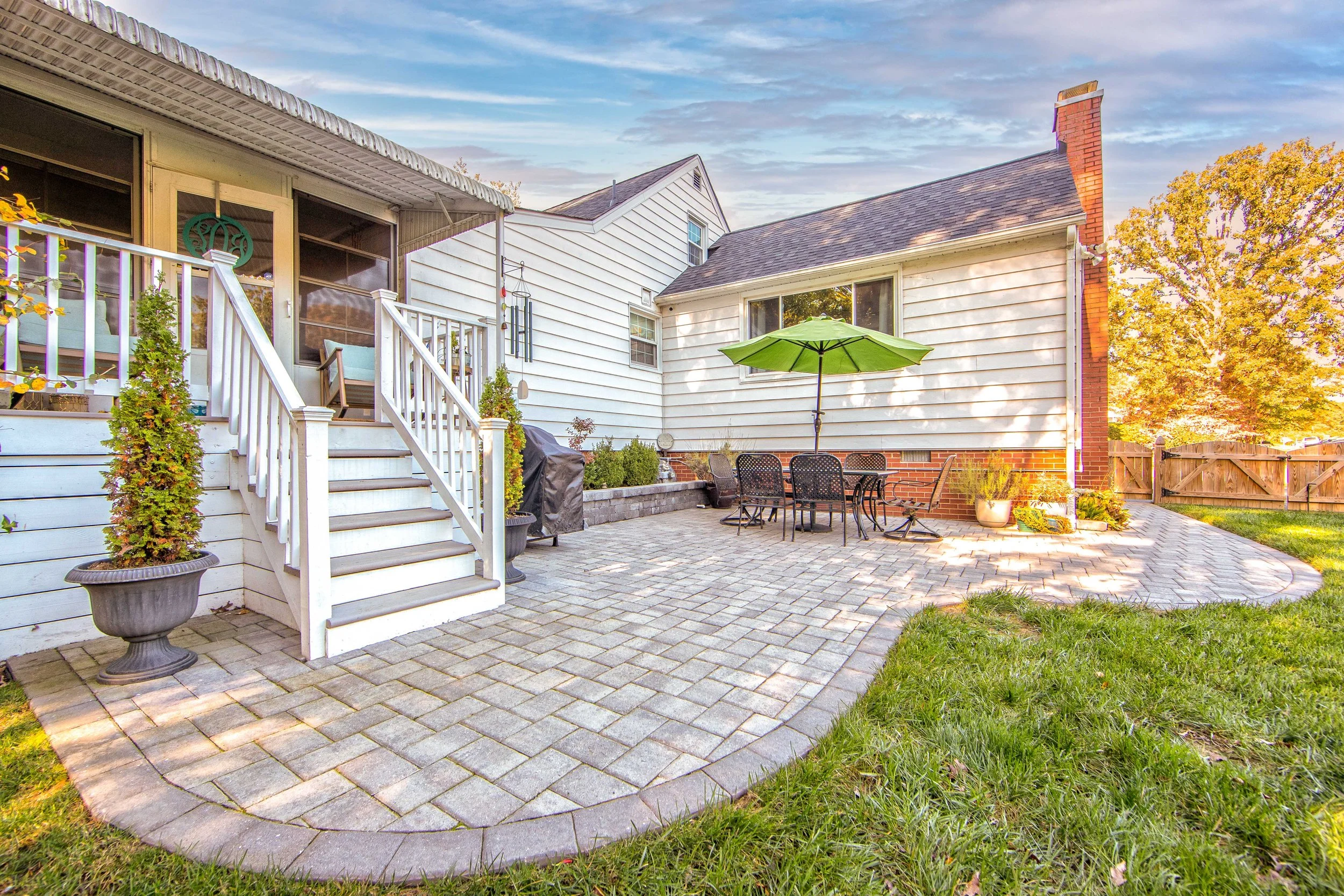
A paver patio looks simple from the outside: a flat, stable surface built to handle years of dinners, gatherings, and quiet mornings outside. What most homeowners never see is the layer of decisions underneath it that determines whether that patio lasts for decades or starts failing within a few seasons. In Columbia, TN, where clay soil and heavy seasonal rain are part of nearly every property, drainage planning does more to determine a paver patio's lifespan than the paver style or pattern ever will.
This guide walks through why drainage causes so many paver patio problems in Middle Tennessee, what warning signs to watch for, and what a properly planned installation actually looks like before the first paver goes down.
Many homeowners shopping for a paver patio focus almost entirely on the visible details: paver color, pattern, and overall layout. Those choices matter for the finished look, but they say nothing about how the patio will perform after its first full year of Tennessee weather.
A patio built on a properly engineered base with the right drainage plan can look nearly identical to one that skips those steps, at least until the first heavy rain season exposes the difference.
Related: How a Paver Patio & Plantings in Spring Hill, TN, Enhance Outdoor Living
Why Does Drainage Matter So Much for a Paver Patio in Columbia, TN?
Water that has nowhere to go finds the path of least resistance, and underneath a paver patio, that often means pooling against the base material or working its way beneath the pavers themselves. Over time, that trapped moisture erodes the compacted base that holds each paver in place, which leads to shifting, sinking, and an uneven surface that gets worse every season it goes unaddressed.
Columbia's clay-heavy soil compounds this problem because clay drains far more slowly than sandy or loamy soil. Water that would soak into the ground quickly in other regions can sit near the surface for hours or days after a heavy rain, putting sustained pressure on whatever base and drainage system sits beneath the patio. A paver patio built without accounting for this reality is working against the soil from day one.
This is not a minor regional quirk. Soil composition varies significantly even within Middle Tennessee, and a drainage plan that works well in a sandier pocket of the region may perform poorly just a few miles away on a property with denser clay. Understanding the specific soil conditions on a given property, rather than relying on general assumptions about the region, is part of what separates a patio built to last from one that starts showing problems within its first few years.
The Base Layer Does Most of the Work
Most people assume the pavers themselves are what keep a patio stable, when in reality, the compacted gravel base underneath does the heavy lifting.
A properly built base allows water to move through it rather than collecting and softening the ground below. Skipping proper base depth or compaction to save time during installation is one of the most common reasons patios fail years before they should.
The type of aggregate used in the base also affects how well water moves through it. A base built with the wrong material, or compacted in layers too thick to settle properly, can trap water almost as effectively as solid clay, defeating the purpose of the base entirely.
Getting this step right takes more time upfront than homeowners typically expect, but it is the single factor most responsible for how long the finished patio holds up.
What Happens When a Paver Patio Doesn't Have Proper Drainage?
The most immediate sign of a drainage problem is standing water on or near the patio surface after rain, particularly in low spots that were not properly graded during installation. Water that pools instead of draining away signals that the slope, base, or surrounding grading was not built to move water in the right direction.
Left unaddressed, that standing water eventually finds its way beneath the pavers, softening the base material and causing individual pavers to shift, sink, or heave unevenly. What starts as a minor cosmetic issue, a few uneven pavers here and there, often signals a larger structural problem developing underneath the entire surface.
Freeze-thaw cycles make this worse during Middle Tennessee's colder months. Water trapped beneath the pavers expands when it freezes, pushing pavers upward or out of alignment, then contracts again as it thaws. Repeated over several winters, this cycle accelerates the kind of shifting and unevenness that would otherwise take much longer to develop on a well-drained patio.
Long-Term Damage Beyond the Patio Itself
Drainage failures rarely stay contained to the patio. Water redirected by a poorly graded patio surface often ends up flowing toward the home's foundation instead of away from it, turning a patio problem into a much larger and more expensive structural concern.
Erosion along the patio's edges can also undermine nearby plantings, walkways, or retaining walls that were not designed to handle the redirected water flow. Homeowners sometimes notice these secondary effects before they connect them back to the patio itself.
A consistently soggy section of lawn near the patio, plant beds that never seem to drain properly, or a walkway that has started to settle unevenly can all trace back to water that the patio's drainage plan failed to manage from the start.
How Does Columbia, TN's Clay Soil Affect Paver Patio Installation?
Clay soil expands when saturated and contracts as it dries, a cycle that repeats with every significant rain event throughout the year.
That expansion and contraction puts ongoing pressure on whatever sits above it, including a paver patio's base layer, which is why installations that ignore soil type tend to show problems faster in Columbia than in regions with more stable, well-draining soil.
This same clay composition also means water takes longer to disperse after heavy rain, which increases the amount of time a patio's drainage system needs to actively manage water rather than relying on the ground to absorb it naturally.
A drainage plan built for sandy soil in another region will not perform the same way once it meets Middle Tennessee's dense clay.
Grading Decisions Made Before Installation Begins
Correct grading directs water away from the patio and toward an appropriate drainage point before a single paver is set.
This step happens well before the visible part of the project begins, which is part of why it often gets underestimated by homeowners comparing quotes based on the finished look alone rather than what happens beneath the surface.
Grading also has to account for how the patio connects to the rest of the property, not just the patio footprint itself. A patio graded correctly on its own but installed without considering the slope of the surrounding yard can still end up redirecting water toward a neighboring low point, a planting bed, or the house itself.
Evaluating the whole property's water flow, not just the patio area, is part of what separates a durable installation from one that creates a new problem somewhere else in the yard.
What Drainage Solutions Protect a Paver Patio Long-Term?
A properly compacted gravel base with adequate depth is the foundation of any drainage-conscious paver patio, since it allows water to move through and away from the surface rather than pooling against it. The right base depth depends on the specific soil conditions and the intended use of the patio, which is why a one-size-fits-all approach rarely holds up across different properties.
Beyond the base, a slight slope built into the patio surface itself, typically directing water away from the home, gives rain somewhere to go rather than letting it settle. Combining that slope with a French drain, a dry well, or a properly routed downspout extension addresses water that the base and slope alone cannot fully manage, particularly during Middle Tennessee's heavier storm events.
Each of these solutions works best when matched to the specific problem a property is facing rather than applied as a default. A French drain intercepts and redirects groundwater moving laterally toward the patio, while a dry well gives collected water a place to disperse gradually rather than concentrating it at a single discharge point.
Choosing the right combination depends on the property's slope, soil composition, and how much water the site typically manages during a heavy storm.
Permeable Paver Systems as an Additional Option
Permeable paver systems, which use specially designed joints and a deeper aggregate base, allow water to filter directly through the patio surface rather than running off to the sides.
This approach works particularly well on properties already dealing with drainage challenges elsewhere in the yard, since it reduces the total volume of water that needs to be redirected around the patio.
Permeable systems require a deeper and more specialized base than a standard paver installation, which adds to the upfront planning but pays off through reduced surface runoff over the life of the patio.
Homeowners weighing this option should discuss it early in the design process, since retrofitting an existing standard patio into a permeable system typically requires a full rebuild rather than a partial adjustment.

Can an Existing Paver Patio Be Fixed If Drainage Wasn't Planned Correctly?
An existing patio showing signs of drainage failure, such as pooling water, sinking pavers, or visible erosion along the edges, can often be corrected without a full replacement, depending on how extensive the underlying damage has become. In many cases, this involves removing the affected pavers, correcting the base and grading underneath, and resetting the pavers once the drainage issue has been resolved.
Because the pavers themselves are typically undamaged in these situations, a partial repair can restore the patio's stability while reusing much of the existing material. This keeps the project focused on the actual source of the problem, the base and grading, rather than requiring a complete replacement of a surface that was never the real issue to begin with.
More significant damage, particularly where the base has eroded extensively or the patio's overall grading works against natural water flow, may call for a more complete rebuild that addresses the drainage plan from the ground up.
Identifying the issue early, before it spreads across a larger portion of the patio, generally keeps the repair scope smaller and more manageable.
Signs It Is Time to Call a Professional
Recurring puddles in the same spot after every rain, pavers that rock or shift underfoot, and visible gaps opening between pavers are all signs that the drainage beneath the patio needs professional evaluation rather than a surface-level fix.
Addressing these signs early prevents a contained issue from spreading into a larger, more costly repair down the road.
A professional evaluation typically starts by identifying where water is actually coming from and how it is moving across the property, not just where it happens to be pooling on the patio surface.
This distinction matters, since a patio showing symptoms in one corner may actually be dealing with a drainage issue that originates elsewhere on the property and simply surfaces at the patio's lowest point.
Building a Paver Patio That Lasts in Columbia, TN
A paver patio built without a drainage plan designed for Columbia's clay soil and seasonal rainfall is working against the odds from the start. Proper base depth, correct grading, and a drainage strategy suited to the property's specific conditions determine whether a patio holds up for decades or starts showing problems within just a few years.
Niedergeses Landscape has served the Middle Tennessee area for over 30 years, building paver patios and solving drainage challenges together rather than treating them as separate projects.
That combined approach means the same team evaluating the patio's design is also accounting for how water moves across the property, rather than handing off drainage as an afterthought once the patio layout is already finalized.
Contact Niedergeses Landscape to start planning a paver patio built to handle Columbia's soil and weather from day one.
Related: Paver Patio and a Fire Pit: They Simply Go Together in the Franklin, TN, Area
About the Author
In 1990, at just 14 years old, Jayme Niedergeses took the first step in starting his own company when he started mowing lawns around his hometown. From that one-man lawn-mowing operation grew a reliable, full-service landscaping company that serves the entire Middle Tennessee Area. Niedergeses landscapers are fully licensed, insured, highly trained, and extensively experienced. Every full-time and seasonal member of our crew is dedicated to providing excellent customer service as they create and care for beautiful landscapes.