What Landscape Design Actually Looks Like When Someone Designs It for Your Property in Columbia, TN
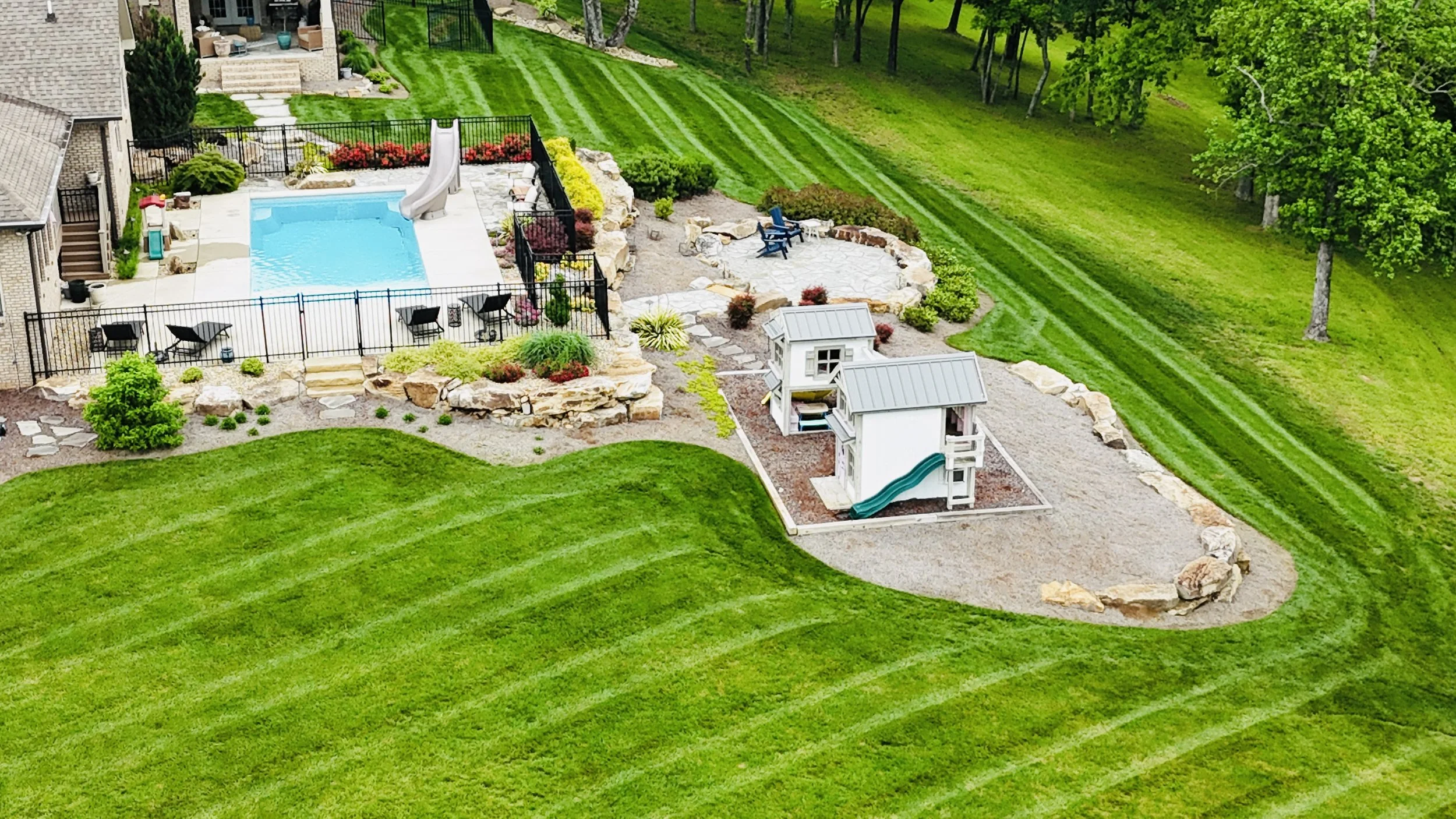
There is a difference between a yard that has things in it and a yard that was designed. Both can have plantings. Both can have a patio. Both can have a fire pit and mulched beds and a walkway that leads from the driveway to the front door. But one of them feels intentional. The other one feels like a collection of decisions that were made separately, at different times, without a plan connecting them.
That is what landscape design changes. Not the elements. The relationship between them. The way the patio sits relative to the house. The way the plantings frame the space without crowding it. The way the grading moves water off the property instead of into the foundation. The way the outdoor space works as a whole, not as a list of features installed one at a time.
In Middle Tennessee, where the climate is warm, the growing season is long, and homeowners spend real time outdoors from March through November, the design of the outdoor space matters more than most people give it credit for. It determines whether the backyard is a place you want to be or a place you walk past on the way to the garage. And it determines whether the money spent on the project delivers lasting value or creates problems that need to be corrected a few years down the road.
Related: How Expert Landscaping and Landscape Design Can Solve Drainage Issues in Brentwood and Franklin, TN
Why the Design Comes Before Everything Else
Most homeowners start with a feature. They want a patio. They want a fire pit. They want new plantings along the front of the house. And there is nothing wrong with starting from a specific desire. But the feature is not the design. The design is the framework that tells the feature where to go, how big to be, what material to use, and how it connects to everything around it.
Landscape design begins with the property itself. The grade. The drainage patterns. The sun and shade exposure throughout the day and across the seasons. The soil conditions. The existing trees and structures. The views worth preserving and the views worth screening. The way the family moves between the house and the yard, and what they want to do when they get there.
These observations lead to a plan that addresses the property as a single environment rather than a series of isolated projects. And that plan is what prevents the most common problems in residential landscaping: the patio that floods because nobody accounted for the grade, the planting bed that dies because it was installed in soil that holds water like a bathtub, the fire pit that smokes out the patio because it was positioned upwind, and the walkway that nobody uses because it does not follow the path people actually walk.
What Middle Tennessee's Climate Means for the Design
The climate in Columbia, Franklin, Brentwood, and the surrounding communities is generous in some ways and demanding in others. The growing season is long. Warm season grasses like bermuda and zoysia thrive through the summer months. The plant palette is broad, with options that range from native Tennessee species to well adapted ornamentals that provide multi season interest.
But the heat and humidity of July and August stress both plants and people. A landscape design that does not account for shade, airflow, and heat mitigation will produce an outdoor space that is uncomfortable during the exact months when the homeowner wants to be outside the most. Strategic placement of shade trees, pergolas, and pavilions on the south and west sides of the primary living area can drop the perceived temperature by ten degrees or more during peak afternoon heat. Planting beds positioned to channel airflow through the seating area rather than block it make the difference between a patio that feels stagnant and one that feels inviting even on a July evening.
The soil across Middle Tennessee is another factor that shapes the design in fundamental ways. Much of the region sits on heavy clay with a limestone substrate. Clay drains slowly, compacts easily, and creates conditions that are hostile to plants with shallow root systems or low tolerance for wet feet. It also affects hardscape performance. A paver patio installed on clay without adequate base preparation and drainage will shift, settle, and develop uneven surfaces within a few years as the soil expands and contracts with moisture changes.
Rainfall in this region is significant. Middle Tennessee receives roughly 50 inches of precipitation annually, and much of it arrives in heavy storm events during spring and summer. A landscape design that does not address drainage is a landscape design that will fail. Water needs somewhere to go, and the design needs to tell it where. French drains, channel drains, dry creek beds, and regrading are all tools that a landscape designer uses to manage water on the property. The specific solution depends on the grade, the soil, the volume of runoff, and the relationship between the house, the hardscape, and the surrounding landscape.
The Process of Designing a Landscape That Works
A landscape design that actually works for the property and the homeowner follows a process. It is not a single meeting. It is not a sketch on a napkin. It is a sequence of conversations, observations, and decisions that build on each other.
The process typically includes:
An initial site visit where the designer walks the property with the homeowner, listens to the goals and preferences, and assesses the conditions. This is where the constraints and the opportunities become visible. The slope that creates a drainage problem also creates an opportunity for a terraced planting bed. The mature oak that limits sun exposure also provides the shade that makes the patio usable in August.
A site analysis that documents the grade, the drainage patterns, the soil conditions, the sun and shade exposure, the existing vegetation, the utilities, and the relationship between the house and the outdoor space. This analysis is the foundation that the design is built on.
A design concept that translates the homeowner's goals and the site conditions into a layout. This may include plan drawings, material selections, plant lists, and visual references that help the homeowner understand what the finished project will look like and how the space will function.
A review and revision process where the homeowner provides feedback, asks questions, and refines the design before construction begins. This is the phase where changes are easy and inexpensive. Once construction starts, changes become disruptive and costly.
A construction plan that translates the approved design into a buildable scope, including grading plans, drainage specifications, material quantities, and installation sequencing.
This process takes time. But it saves time, money, and frustration during construction, because every decision has already been made, every detail has already been considered, and the crew arrives on site with a clear plan rather than a set of assumptions.
How the Design Solves Problems Before They Start
The most valuable thing a landscape design does is solve problems before they become visible. The homeowner may not be thinking about drainage when they ask for a new patio. But the designer is. Because the patio will change how water moves across the yard, and if the drainage is not addressed in the design, the homeowner will be dealing with pooling, erosion, or foundation issues within the first year.
The same principle applies to every element:
Plantings selected without understanding the soil will struggle or die. Plantings selected for the conditions on the specific property will establish, grow, and improve every year.
A fire pit positioned without considering wind direction will push smoke toward the seating area on most evenings. A fire pit positioned downwind of the primary seating area will not.
A walkway that follows a straight line from the driveway to the front door may look clean on paper but feel unnatural on the property. A walkway that follows the path people actually walk, even if it curves or angles, will be used every day.
A retaining wall built without a drainage plan behind it will develop hydrostatic pressure and eventually lean or fail. A retaining wall with proper drainage will perform for decades.
Outdoor lighting designed as an afterthought will have visible conduit runs, awkward fixture placement, and hot spots that overlight some areas while leaving others dark. Lighting designed as part of the landscape plan will be integrated, balanced, and invisible in its infrastructure.
These are not hypothetical problems. They are the problems that show up on properties where the work was done without a design. And they are the problems that a good design prevents entirely.
Why Design and Build Should Come From the Same Team
There is a version of landscape design where one company draws the plan and another company builds it. That arrangement can work. But it introduces a gap between intention and execution that often leads to compromises, misinterpretations, and results that do not match the original vision.
When the same team that designs the landscape also builds it, the translation from plan to property is direct. The designer knows what the crew is capable of. The crew knows what the designer intended. The grading, the drainage, the plant placement, and the hardscape installation all follow the same logic because the same people are responsible for both the idea and the execution.
It also means that when something unexpected comes up during construction, and it always does on properties with clay soil, existing trees, or significant grade changes, the adjustment happens in real time. The designer is not a phone call away trying to interpret a photo from the job site. They are on the property, making decisions based on what the excavation revealed, what the soil is actually doing, and how the design can adapt without compromising the intent. That kind of responsiveness is only possible when the design and the build are handled by the same team.
That continuity matters most on projects where the site conditions are complex, the grade is significant, or the drainage needs are critical. In Middle Tennessee, where the clay soil and the rainfall demand precise grading and water management, having the design and the construction under one roof eliminates the most common source of miscommunication and the costly corrections that follow.
The Landscape You Design Is the One You Live In
An outdoor space that was designed for the property and the family who lives there does not just look better. It works better. The patio drains. The plantings thrive. The fire pit draws people in without pushing smoke at them. The walkway feels natural. The lighting makes the space inviting after dark. And every element relates to the next in a way that makes the yard feel like one place rather than a series of projects that happened to land next to each other.
For homeowners across Columbia, Arrington, Franklin, Brentwood, Spring Hill, Thompson's Station, and College Grove, the outdoor space is not a seasonal luxury. It is part of the house. It is where dinner happens on weeknight evenings. It is where the kids play after school. It is where the weekend starts and where it winds down. A landscape that was designed for that kind of daily use, that accounts for the heat, the clay, the drainage, and the way the family actually lives, becomes the most used part of the property.
If your property has been waiting for a plan, or if the outdoor space has never quite come together the way you imagined it would, the starting point is a conversation about the site. What the land is doing. What you want it to do. And how a design built around both of those things can create something worth spending time in.
That is where every good landscape in Middle Tennessee starts. Not with a product. With a plan.
Related: Elevate Your Landscape Design With Well-Planned Plantings in the Franklin, TN Area
About the Author
In 1990, at just 14 years old, Jayme Niedergeses took the first step in starting his own company when he started mowing lawns around his hometown. From that one-man lawn-mowing operation grew a reliable, full-service landscaping company that serves the entire Middle Tennessee Area. Niedergeses landscapers are fully licensed, insured, highly trained, and extensively experienced. Every full-time and seasonal member of our crew is dedicated to providing excellent customer service as they create and care for beautiful landscapes.